

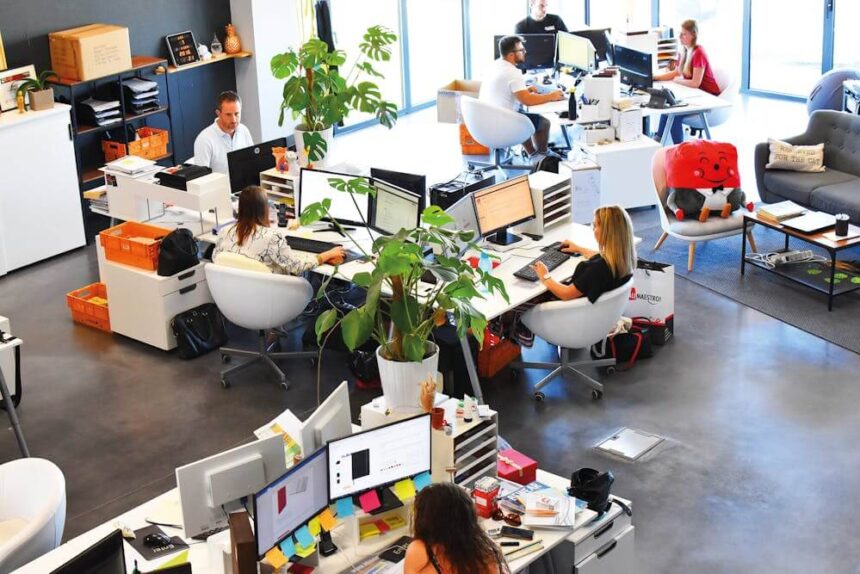
A good workspace is about more than a professional look. It is about how easily a team can work, how concentrated they are, and how well every day goes for them. Good design means you have fewer fires to put out and more time to actually work. This blog will teach you how it must actually support your office’s operations, not just its appearance.
Design Around How Work Really Happens
The first step is to identify the natural fluctuations that occur within your team. You will have a better understanding of the natural order of things if you map out the places where people work and think, as well as the locations of their materials.
By strategically arranging spaces, many activities can be eliminated, which in turn reduces the amount of stress experienced by employees. The majority of natural movements are quick and unnoticed, but things that are not properly placed put pressure on the brain.
Prioritise Flow and Accessibility
Each day, communication serves as a catalyst for forward movement. To ensure that essential devices, materials, and progress are delivered on time, it is important to have clear paths that facilitate the movement of people and communication. When things move without any interruptions, there is no delay in retrieving the tools that are required.
Balance Open Areas With Focused Zones
Bonding and interaction are fostered in expansive spaces, but they can quickly become overwhelming for people.
An effective working environment is designed to include both wide areas for commonalities as well as confined zones for times when people need to get things done without being distracted. In this manner, your employees become more productive without experiencing a sense of confinement.
Build Storage Into the Design
Efficiency is hindered by clutter. With storage built into the workspace, tools and documents are always on hand, close by without spreading all over the desk or walkways.
This is another way that intelligent commercial fitouts are a cut above, as this storage is designed around your workflow instead of being a bulky afterthought. It leaves you with a more peaceful, neater workspace that’s easier to keep clean.
Use Lighting to Support Energy Levels
Lighting directly impacts how your team feels throughout the day. They remain focused and happy in natural light, and the different areas work well with layering. Your team will experience less eye strain and fatigue when lighting aligns with the task. Other than that, their energy is more level through the long workdays.
Choose Materials That Can Handle Daily Use
Durable finishes are essential in high-traffic workspaces. Flooring, surfaces, and fixtures need to resist daily use to eliminate the need for constant repairs and upgrades. Ultimately, the selected materials allow the space to remain both functional and professional in the long run. The reliability of the space guarantees its ability to support continuous operations.
Allow Room for Change and Growth
Your operations will not remain the same forever. With its flexible layouts and modular elements, it is easier for you to adjust the operations in response to business growth. Indeed, this forward thinking reduces the level of disruption experienced in the long run. Your workspace should be expansive and growth-oriented instead of holding back.
Operational Design Makes Work Feel Easier
Keeping a strong focus on daily operations makes your workspace entirely “quiet”. All work runs smoothly and predictably, tasks are executed quickly and with less friction, and minor challenges fade into the working environment.
Performance-based design is only present when you forget it is there because it helps you avoid distractions and streamline the workload each day.