

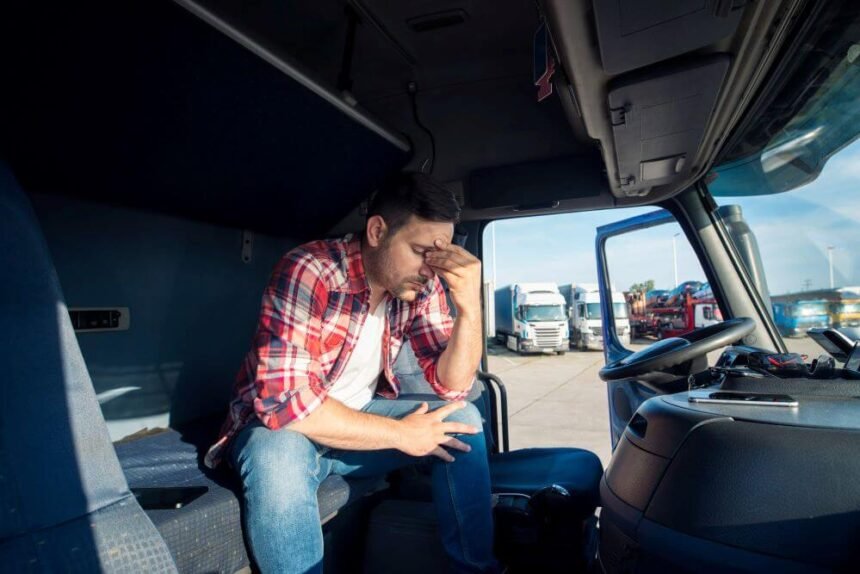
In 2024, crashes involving large trucks killed 5,340 people. The Federal Highway Administration data show that large trucks represent 5% of vehicles. These types of vehicles account for 10% of miles traveled.
When one of those crashes happens, the driver is rarely the only party a claim can reach. Who can be held liable for a truck accident aside from the driver? Trucking companies carry their own liability exposure. The law sometimes holds them responsible for what their drivers do. In other cases, the trucking company is made liable for their own decisions.
Sorting out which theory applies, and to which party, affects how a claim gets built and who eventually pays. Here’s how a trucking company can be held liable for a truck accident.
Vicarious Liability for the Driver’s Conduct
A trucking company could be found liable under the legal doctrine of respondeat superior. This principle provides that a company can be held responsible for its employee’s actions of negligence when they are acting within the scope of their employment. Situations that can make use of this doctrine include running an assigned route or making deliveries. In these circumstances, liability may apply even without separate negligence by the trucking company itself.
That scope-of-employment limit matters. A driver can shift responsibility back toward themselves if they cause a wreck while using the truck for a personal errand unrelated to work or if their conduct is so recklessly out of line with company policy that it falls outside any normal job duty. Whether a given trip counts as within the scope of employment is frequently the first factual question an investigation has to answer.
Direct Negligence by the Company Itself
A trucking company may also face liability for its own negligent business practices. One common claim involves negligent hiring, which may arise when a company fails to adequately review a driver’s qualifications, driving history, background, or commercial driver’s license before allowing that person to operate a truck.
Negligent training or supervision covers a company that fails to train drivers properly or to monitor whether they are complying with federal safety rules. Negligent maintenance applies when a company ignores known mechanical defects or skips required inspections. Negligent retention describes a company that keeps a driver employed after learning of a pattern of violations or a positive drug test.
These direct theories can back up a case even when the company’s role in the scope-of-employment analysis is unclear. In some jurisdictions they allow for punitive damages in a way that an ordinary vicarious liability claim does not.
Why FMCSA Violations Carry So Much Weight
The Federal Motor Carrier Safety Administration sets the baseline safety rules that interstate carriers have to follow, covering everything from driver qualification files to vehicle maintenance to hours of service. Knowing how trucking company liability & FMCSA violations connect helps when assessing a commercial truck accident claim.
Federal regulations say that property-carrying drivers can only drive for 11 hours after 10 hours off duty, within a 14-hour on-duty window. Drivers must take a 30-minute break after 8 hours of driving. Drivers also cannot drive after 60 hours on duty in 7 consecutive days or 70 hours in 8 consecutive days, depending on the carrier’s schedule. A 34-hour off-duty period may reset the calculation.
Non-compliance with the Hours of Service regulations is not necessarily liability for a crash, but it will likely be used as evidence in a negligence claim. Depending on state law and the circumstances, a safety regulation violation may establish negligence per se or serve as evidence for a jury to look into. Electronic logging device records can also provide detailed information about a driver’s hours and may help determine whether fatigue or regulatory violations played a role in the collision.
Fatigue is a major part of why these rules exist in the first place. The Large Truck Crash Causation Study, a federal study of large truck crashes conducted by FMCSA and the National Highway Traffic Safety Administration, found that driver fatigue was coded as a contributing factor in roughly 13 percent of the crashes examined where the truck driver was assigned the critical reason for the collision.
Third Parties Beyond the Driver and the Carrier
A trucking company is not always the only entity with exposure. Depending on how a crash happened, liability can also extend to the manufacturer of a defective part. This includes brakes, tires, or a steering component that failed and contributed to the crash.
A maintenance contractor may also be responsible if a mechanical failure tied to its work caused the crash.
A cargo-loading company may bear responsibility if poorly secured freight caused the truck to become unstable. In some cases, a government entity may also be involved when a hazardous road design or maintenance issue contributed to the crash. Cases involving the government are subject to applicable governmental liability and immunity rules.
Because a single crash can implicate several of these parties at once, and because a truck’s own onboard data can be erased once the vehicle goes in for repairs, investigations tend to move quickly.
Evidence That Establishes Liability
Proving any of these theories usually requires more evidence than a standard passenger vehicle collision. Black box data can show a truck’s speed and braking in the moments before impact, but that data can be permanently lost once a damaged vehicle goes through repairs, so timing matters. Driver qualification files and prior safety violations help establish whether a company was negligent in who it put behind the wheel, while maintenance logs speak to whether known mechanical issues went unaddressed.
Electronic logging device data can provide a detailed record of a driver’s hours. With this data, it would be easier to compare actual driving time with federal hours-of-service requirements.
Some trucking evidence may be overwritten, lost, or altered through routine data retention and vehicle repair processes. Prompt investigation and appropriate preservation efforts can therefore help protect records that may be important in determining how a crash occurred.
What This Means for an Injury Claim
Commercial trucking companies carry higher insurance limits than passenger vehicles, with federal minimums starting at $750,000 for general freight. These limits make it important to identify all parties and conduct that may have contributed to a crash.
A claim focused only on the driver’s actions could overlook potential liability involving the trucking company’s hiring practices, vehicle maintenance, supervision, or compliance with hours-of-service regulations.
Truck accident claims may also involve multiple responsible parties. There may also be several insurance policies involved, along with evidence that can be lost or overwritten over time. For these reasons, an early and thorough investigation can be beneficial when determining how the crash occurred and who may be legally responsible.