

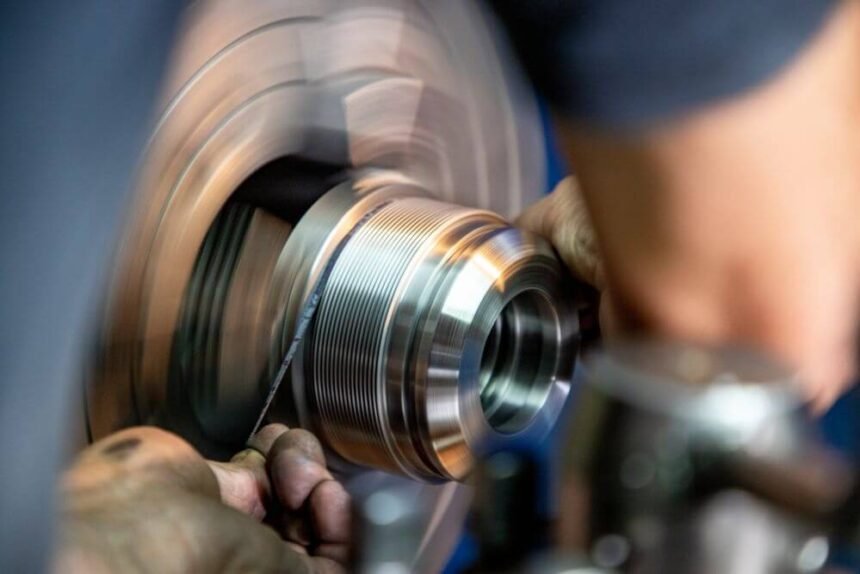
A shop that waits to buy a CNC lathe until drowning in repeat orders is already late. The right play is to view the transition as a phased operational transformation, not a machine swap, and to develop it around your existing floor’s people.
Start by auditing your job mix, not your equipment list
Before you determine the pricing of any machine, first, you need to obtain your job history and categorize it based on volume, complexity, and tolerance. Just about all shops discover that a few part families tend to consume manual hours disproportionately – either they are short runs that are constantly being reordered, or they are parts having extremely tight tolerance and concentricity requirements that largely stretch manual machinists. Those are considered your bottleneck jobs. Also, they are the jobs that contribute to the fastest payback of a CNC turning center since the gap between manual and automated performance is the greatest exactly at the point where volume and precision are optimal. If you purchase equipment based on your intuition rather than job information, you will certainly either have an overkill machine or an underused one.
Rethink what ROI actually means here
The purchase price of a CNC lathe can prevent many manufacturers from transitioning from manual to CNC too soon. However, when making the calculation, it’s not as simple as comparing the cost of the machine to no new equipment. The cycle time needs to be considered, along with labor and material costs. Tool turret technology has evolved so operators can run two machines simultaneously. This effectively splits the machine cost in half, reducing the part cost. Labor time needs to be recalculated as there is a significant drop in finished product labor with CNC, causing a drop in labor cost per piece. Finally, the scrap rate can drop as human error in part forming is minimized with a CNC machine.
Your manual machinists are your best programmers
People sometimes assume that if you’re adopting CNC, you’re going to be replacing the older machinists on a lathe for twenty years, with entirely new employees. It doesn’t have to be that way. The machinist that can hear a tool starting to chatter and knows what that particular alloy is going to feel like under a specific load has instincts that no level of training on CAM software is ever going to fully replicate all on its own. What they need is a bridge – G-code fundamentals, CAM software workflow, and time with the machine. This isn’t just an abstract argument, either. That same Deloitte and Manufacturing Institute study predicts that 2.1 million manufacturing jobs will go unfilled by 2030. If you’re the shop that can take your existing machinists and turn them into your programmers, you’re not just solving a transition problem. You’re the shop that’s going to have the labor pool solution handed to you.
Buy smart, not new, for your first machine
It’s not just about laying out less cash up front. Sourcing reliable, well-maintained CNC lathes through the used market gives you a more predictable lifetime cost because the machine has already devalued – provided you’re doing your due diligence and using an experienced machine tool partner to inspect it before you buy, checking spindle runout, vibration, alignment, and other issues that can be costly to correct if you overlook them. It has also likely already seen its highest rate of wear, whereas a new machine might degrade rapidly if it’s not getting ideal support from the rest of the process. It’s common for older equipment to produce better pieces than an equivalent new machine that’s being asked to handle more work because the rest of the environment isn’t quite on the same curve.
Keep manual lathes running while you scale
When you purchase a CNC lathe, it’s important that you ensure your team is set up for success from day one. Before the machine even hits the shop floor, you should have your programmers deep in the simulation software dialing in cutting parameters, tinkering with workholder designs, and designing custom tooling and tool paths that take full advantage of the machine’s capabilities. Meanwhile, your setup machinists should be working with the vendor to potentially upgrade standard toolholding and workholding products shipped with the machine.
The closer your team gets to making chips during the pre-buy process, the more productive the day will be when the truck finally pulls in. It’s wasteful to spend three-quarters of a million dollars on a fancy new lathe and then sit the whole crew around for a week waiting for an outside integrator in a suit and tie, pencil behind his ear, to come out and start it up. Most guys in a shop know how to run a CNC machine. If you don’t, that’s indicative of a higher level of unpreparedness that needs to be addressed before the machine arrives.
The transition works when the people do
A CNC lathe allows your top machinists to do the high-level thinking that much of their training prepared them for, rather than spend their days executing the same simple tasks they’ve perfected over the years. This leads to better job satisfaction, better employee retention, and a more skilled, engaged workforce overall.