

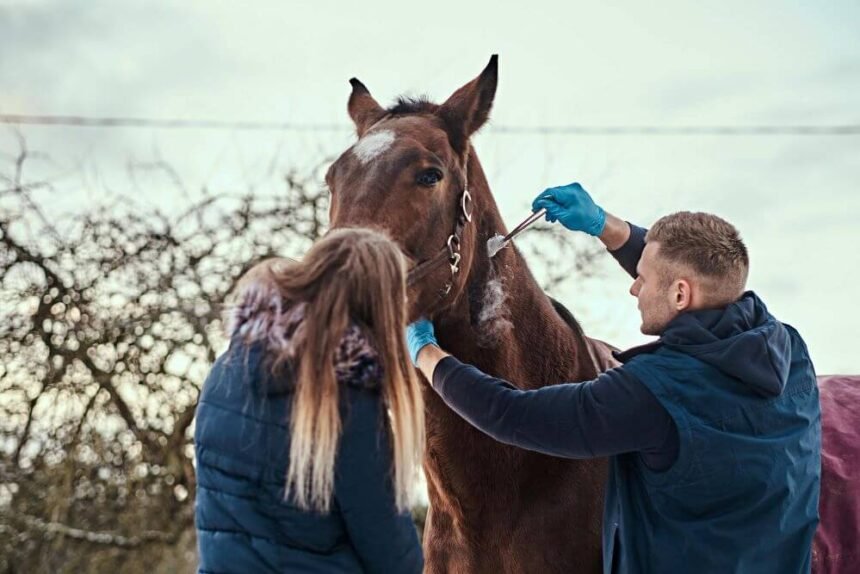
Every change in speed and appearance must be monitored to make your horse a great athlete. But parasites can do a lot of damage to your horse’s health before you even know there’s a problem. Luckily, you can safely restore their health if you notice the signs of an infestation first. This article goes over the clear signs that it’s time to treat your horse.
1. Unexplained Weight Loss and Poor Body Condition
Worms flourish by stealing critical nutrients from food that’s being processed through your animal’s sophisticated digestive system. If you are seeing their ribs or hip bones become overly visible, you should act urgently to help them heal.
Once treated with a targeted fenbendazole horse wormer, these parasites can be destroyed, and your horse will once again be able to digest food normally. In short, recovering their function of nutrient digestion is the starting point to putting them back on track with their weight.
2. A Dull, Rough, and Lifeless Coat
A healthy horse’s coat is slick, glossy and represents excellent inner and outer health and nutrition. However, parasites rob the body of the necessary vitamins and minerals required for the skin and hair. You see them become dry, brittle and very coarse, losing their lovely natural appearance.
Even powerful grooming routines and high-end topical sprays won’t restore a coat that is battling an internal parasite problem. If their hair gets consistently shaggy or doesn’t properly shed out in spring, check their health deeper down. Clearing that infestation brings those essential ingredients back to the surface, restoring their radiant, signature shine.
3. Persistent Tail Rubbing and Skin Irritation
Have you seen your horse rubbing his or her hindquarters against stable doors, fence posts, or sturdy trees in the paddock nearly nonstop these days? This is common behaviour due to pinworms crawling out and putting their sticky eggs around the tail area.
Over time, that friction can erode the hair at the top of the tail, and the hair eventually becomes dishevelled and ugly. It also generates painful bald spots and skin infections that pave the way for trickier secondary health troubles.
4. Frequent Bouts of Lethargy and Low Energy
Inflammation inside the body is caused by parasites, and low red blood cell counts can make your animal feel tired. They might want to be alone in the paddock instead of moving back and forth with the rest of the herd.
Do not give up if your usual horse is alert and responsive but slow to respond when you call. Getting rid of the parasites improves their blood health and makes them look and feel young again right away.
5. The Appearance of a Distended Potbelly
If an otherwise thin horse has a distended, sagging belly, that is a classic structural sign of an advanced worm infestation. This physical shift is especially frequent in younger foals and yearlings whose immune systems are still developing.
The high invasiveness of parasites results in substantial internal swelling and fluid retention in the fragile abdominal system. This condition produces a signature appearance, with the horse seeming bloated in the gut and losing healthy muscle across the spine.
6. Recurrent Mild Colic and Digestive Discomfort
This damage often presents as frequent, mysterious bouts of mild colic that might cause your animal to stretch out or look at their flanks. They may paw the ground or lie down multiple times in an obvious effort to ease their upset stomach.
These digestive problems can quickly turn into dangerous problems if the structural blockage isn’t fixed with regular antiparasitic use. Keeping the digestive tract free of bothersome worms all year long is the only way to keep it healthy.
Protecting Your Equine’s Long-Term Health
Being a responsible horse owner means staying ahead of the curve when it comes to managing your antiparasitic strategy. Maintaining your horse’s competitiveness, energy, and comfort throughout the day requires a consistent, well-planned routine of care.
For optimal results, always tailor your treatment method to the specifics of your pasture and cattle. Maintain a healthy horse so you can go on many exciting rides side by side.