

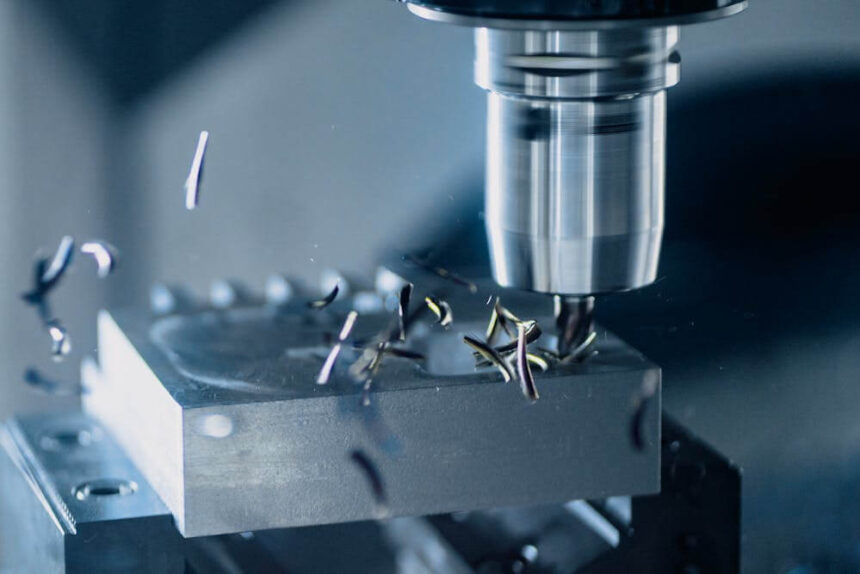
In the automotive industry, the demand for high-precision parts has reached new heights as vehicles become more technologically advanced. Ensuring that every component is manufactured to exact specifications is critical for the performance, safety, and reliability of modern vehicles. One of the most efficient and accurate ways to achieve this is through production prototype CNC machining. This method allows manufacturers to produce high-precision parts quickly, efficiently, and with minimal errors, which is especially crucial when developing components for automobiles.
CNC (Computer Numerical Control) machining is a process that uses automated machines to cut and shape materials with extreme precision. These machines are controlled by computer programs, allowing them to perform intricate tasks with high accuracy, making them ideal for producing prototype parts. For automotive manufacturers, production prototype CNC machining is invaluable when developing new parts or testing designs before full-scale production begins. The ability to quickly prototype parts helps reduce costs, shorten lead times, and ensure the final product meets the required specifications.
The Role of CNC Machining in Automotive Parts Production
CNC machining plays an integral role in the production of high-precision automotive components. Automotive parts often require very tight tolerances, especially in critical systems like the engine, transmission, suspension, and braking systems. Achieving these tight tolerances through traditional manufacturing methods can be time-consuming and expensive. However, Rapid Axis CNC machining provides an efficient solution by automating the entire manufacturing process, ensuring both speed and precision. Manufacturers exploring advanced capabilities for prototype and production machining often turn to providers such as Rapid Axis, which specialize in high-precision CNC machining services designed for complex automotive components.
The Rapid Axis refers to the speed and motion capabilities of a CNC machine. In this context, rapid axis motion refers to the quick movement of the machine’s tool head along various axes. This rapid movement allows the machine to perform operations like drilling, milling, and turning with great precision and at a much faster rate compared to manual machining methods. By incorporating Rapid Axis capabilities, manufacturers can reduce production time, leading to faster iterations of prototypes and a more agile development process. This is especially critical in industries like automotive manufacturing, where the need to test new designs and components quickly can be the difference between gaining a competitive edge and falling behind.
Precision and Accuracy in Prototype Development
One of the biggest challenges in the automotive industry is the production of parts that meet exacting quality standards. Whether a part is designed for performance, safety, or aesthetics, it must adhere to strict tolerances. CNC machines are capable of achieving precision down to micrometers, ensuring that each part is made with extreme accuracy. This is essential in automotive manufacturing, where even the slightest deviation can affect the overall performance of the vehicle.
In prototype development, the ability to replicate a digital design exactly is crucial. CNC machining offers a high degree of control over the manufacturing process, ensuring that prototypes are made with minimal deviation from the original design specifications. In many cases, designers and engineers rely on CNC machining to quickly create functional prototypes that can be tested for fit, form, and function before proceeding with mass production.
The precision offered by CNC machining is also beneficial for testing the performance of components in real-world conditions. For example, parts like engine components, brackets, and connectors must be able to withstand extreme stress and high temperatures. CNC machining allows for the creation of prototypes that can be rigorously tested under controlled conditions, ensuring that only the highest quality components are approved for full-scale production.
Streamlining the Development Cycle with Rapid Prototyping
One of the key advantages of CNC machining in the automotive industry is its ability to streamline the development cycle. Traditional methods of prototyping often involve the creation of molds or tooling, which can be time-consuming and costly. In contrast, CNC machining eliminates the need for these intermediate steps, allowing manufacturers to produce functional prototypes directly from digital designs.
The use of Rapid Axis CNC machines enables manufacturers to reduce prototyping time significantly. For example, the movement of the tool head along multiple axes at rapid speeds means that intricate shapes can be machined with greater efficiency. This is particularly beneficial when developing complex automotive parts, such as suspension arms, gearboxes, and fuel injection systems. By reducing prototyping time, manufacturers can iterate on designs faster, leading to quicker development cycles and faster time-to-market for new automotive technologies.
Moreover, the ability to make changes to prototypes quickly and easily without incurring additional costs makes CNC machining a valuable tool for testing different iterations of a design. Engineers can modify the design based on test results, and CNC machining allows them to produce a new prototype in a fraction of the time it would take using traditional manufacturing methods. This flexibility is essential in a fast-paced industry like automotive manufacturing, where new models and features are constantly being developed to meet consumer demand.
Cost-Efficiency of Production Prototype CNC Machining
While the initial investment in CNC machines can be significant, the long-term benefits make it an economically viable option for automotive manufacturers. One of the primary reasons for this is the reduced cost of prototyping. Traditional prototyping methods often require expensive molds, tools, and fixtures, which can add significant costs to the development process. CNC machining, on the other hand, uses computer-controlled machines to directly produce parts from raw materials, eliminating the need for additional tooling or molds.
In addition to reducing tooling costs, Rapid Axis CNC machining improves efficiency by automating much of the production process. CNC machines can operate 24/7 with minimal human intervention, allowing for higher production rates without sacrificing precision. This increased efficiency leads to cost savings, as parts can be produced in less time and with fewer resources. Additionally, because CNC machines are capable of producing parts with high accuracy, the likelihood of errors or defects is minimized, further reducing the costs associated with rework or scrapping defective parts.
Furthermore, the flexibility offered by CNC machining makes it an attractive option for manufacturers producing low-volume or custom parts. In the automotive industry, it is not uncommon for manufacturers to need small batches of specialized components for prototype testing, limited-edition models, or custom vehicles. CNC machining allows for these parts to be produced efficiently without the need for large-scale production runs or the creation of expensive molds, offering a significant cost advantage over traditional manufacturing methods.
The Future of CNC Machining in Automotive Manufacturing
As the automotive industry continues to evolve, the need for precision and efficiency in manufacturing will only increase. The integration of CNC machining into the production process has already revolutionized the way automotive parts are produced, but there are still significant advancements on the horizon. The ongoing development of Rapid Axis technologies, along with advancements in materials science and automation, is expected to further improve the capabilities of CNC machining.
The future of CNC machining in automotive manufacturing will likely involve even greater levels of automation, with machines becoming more capable of self-correction and adaptive manufacturing. Artificial intelligence (AI) and machine learning algorithms could play a role in optimizing machining processes, allowing CNC machines to learn from previous production runs and make adjustments to improve accuracy and efficiency. These advancements will further reduce production times and costs while maintaining the high levels of precision required for modern automotive parts.
Additionally, as electric vehicles (EVs) and autonomous vehicles become more prevalent, the demand for specialized components will grow. CNC machining, with its flexibility and precision, will be essential in meeting this demand. Whether it’s the production of lightweight materials for electric vehicle batteries or the creation of intricate components for autonomous driving systems, CNC machining will continue to play a central role in the future of automotive manufacturing.
Conclusion
Production prototype CNC machining is an indispensable tool in the development of high-precision automotive parts. By combining the capabilities of Rapid Axis technology with the precision of CNC machines, manufacturers can produce high-quality prototypes quickly, efficiently, and cost-effectively. This method has proven to be an invaluable asset in the automotive industry, helping manufacturers streamline the development process, reduce costs, and ensure that components meet stringent quality standards.
As the automotive industry moves toward more advanced technologies and manufacturing processes, CNC machining will continue to evolve, enabling manufacturers to meet the increasing demand for precision, efficiency, and customization. The ability to rapidly prototype, iterate designs, and produce high-precision parts will be critical for automotive manufacturers seeking to stay ahead of the competition and deliver innovative products to the market.