

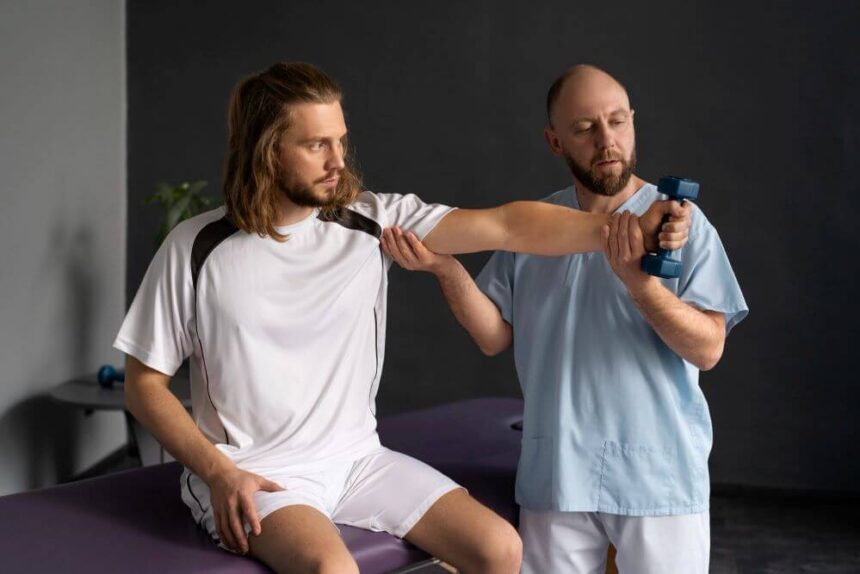
The shoulder is one of the most complex and mobile joints in your body, allowing you to reach, lift, and move in almost any direction. When you feel stiffness or a dull ache, it indicates that your joint is no longer moving in its path, and this can affect everything from sleep to work performance. The article describes how focused physical therapy can help restore your range of motion and build lasting strength.
Identifying the Root Cause of Shoulder Instability
Many people mistake shoulder pain for a simple muscle strain when the issue might stem from deeper joint instability or poor posture habits. A specialist physical assessment involves looking at how your shoulder blade moves in relation to your arm bone to find exactly where the mechanical breakdown occurs. This clarity is essential because it ensures that you are treating the source of the problem.
Restoring Natural Range of Motion Through Gentle Mobilisation
Targeted therapy, like shoulder physio in Fitzroy professionals, uses specific manual techniques and guided stretches to gently encourage the joint tissues to relax. You will learn how to move through your natural range of motion using controlled patterns that reduce that frozen feeling in your shoulder. As your flexibility improves, you will notice that simple activities become much smoother and pain-free.
Strengthening the Rotator Cuff for Better Joint Support
The rotator cuff is a group of small but vital muscles that hold your arm bone securely in its socket. If these muscles are weak or imbalanced, the larger muscles around them have to overcompensate, which often leads to secondary aches in your neck or upper back. Furthermore, your therapy sessions will focus on isolating these deep stabilising muscles with specific exercises that build endurance and control.
Improving Posture to Unload the Shoulder Joint
The way you sit at a desk or stand during the day has an impact on how much space your shoulder joint has to move freely. Rounded shoulders and a forward head position can compress the tendons in the joint, leading to a painful condition known as impingement. Aside from that, a reliable physical therapist will help you realign your spine and strengthen the muscles, and relieve this internal pressure.
Enhancing Functional Power for Sports and Work
Whether you enjoy swimming or have a job that requires manual labour, your shoulders need to handle significant loads with precision and speed. Targeted physiotherapy moves beyond healing and focuses on functional training that mimics the movements you need for your hobbies or career. This transition from basic rehabilitation to performance training helps you return to your sports with confidence.
Reducing the Risk of Recurring Shoulder Injuries
One of the frustrating aspects of a shoulder injury is the tendency for the pain to return just as you think you have recovered. This happens because the underlying weakness or movement fault was never corrected, leaving the joint weak. A therapy programme includes a maintenance phase where you learn how to monitor your own joint health and perform prehab exercises to keep the muscles engaged.
Managing Inflammation and Pain Without Constant Medication
Dealing with persistent shoulder throbbing can make it hard to focus, but many physical techniques can manage this discomfort. A therapist might use heat or soft tissue massage to increase blood flow to the area and encourage natural healing. Learning how to self-manage flare-ups through breathing techniques and gentle movements allows you to take control of your recovery journey.
Committing to a Stronger and More Mobile Future
Looking back at these strategies shows that a healthy shoulder is the result of expert guidance. As you continue to follow a dedicated physical therapy plan, you will likely find that your overall upper body strength improves alongside your mobility. Taking the time to care for your shoulders today is an investment in your ability to remain active, independent, and strong for many years to come.