

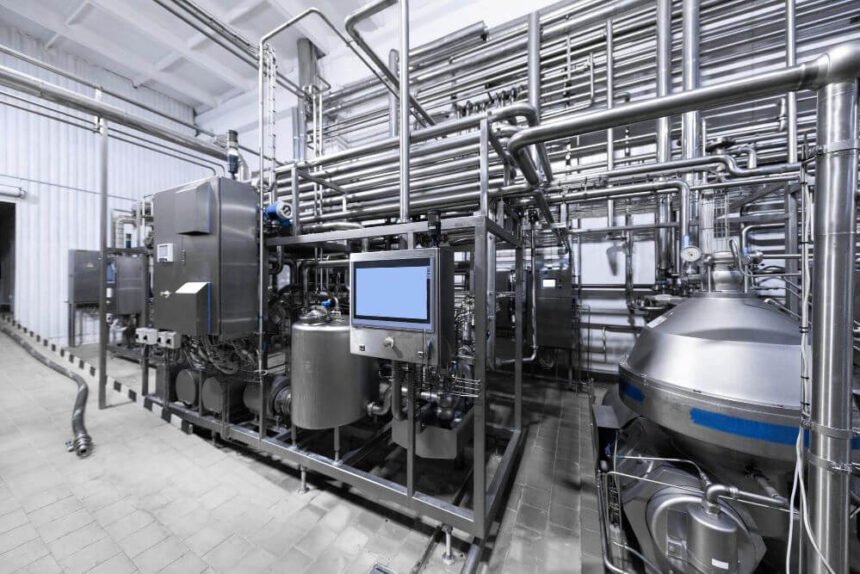
Walk into a meat processing plant, a commercial bakery, and a dairy facility on the same day, and you’ll notice something curious. The machinery looks nothing alike, the temperatures run at opposite extremes, and the workflows follow entirely different logic. Yet all three operations rely on the same underlying category: food processing equipment. Understanding how these needs diverge, and where they overlap, says a lot about how the modern food supply chain actually functions.
The food processing industry is not a single, uniform market. It’s a patchwork of sub-sectors, each shaped by the physical and biological properties of the product moving through it. Meat behaves differently than dough. Dough behaves differently than milk. As a result, the equipment built for one sector rarely transfers cleanly to another, even when the underlying engineering principles are similar.
Why Sector-Specific Design Matters
Food processing equipment is engineered around the material it handles, not just the general task of “processing food.” A grinder built for meat has to account for fat content, connective tissue, and bacterial risk. A mixer built for bread dough has to account for gluten development and fermentation timing. A pasteurizer built for milk has to manage a liquid that scorches easily and separates if agitated incorrectly.
This is why equipment manufacturers rarely try to build one machine that does everything. According to the Food and Agriculture Organization, food processing operations are generally segmented by raw material category precisely because contamination risks, temperature sensitivities, and shelf-life mechanics differ so significantly across product types. A piece of equipment designed without those distinctions in mind tends to underperform or introduce safety risks.
Meat Processing: Precision and Contamination Control
Meat facilities operate under some of the strictest regulatory scrutiny in the food industry, largely because raw meat carries a higher risk of pathogens like Salmonella and E. coli compared to many other food categories. The equipment used reflects that reality.
Key equipment considerations in meat processing include:
- Temperature-controlled cutting and grinding stations that prevent bacterial growth during processing, typically keeping product below 40°F (4°C)
- Stainless steel surfaces throughout, since meat proteins and fats can harbor bacteria in porous or corroded materials
- Automated deboning and portioning systems that reduce human contact with raw product, lowering cross-contamination risk
- Smokehouses and cooking chambers with precise humidity and temperature controls, since undercooking is a leading cause of foodborne illness outbreaks
- Metal detection and X-ray inspection systems, which many facilities incorporate into their hazard analysis and contamination-control plans
The common thread is containment and traceability. Every piece of food processing equipment in a meat facility serves an operational purpose while also helping answer a regulatory question: if something goes wrong, can it be traced back to a specific batch, machine, or moment in the process?
Bakery Operations: Consistency Over Sterility
Bakeries face a different set of pressures. While food safety still matters, the primary engineering challenge is consistency, producing thousands of identical loaves, rolls, or pastries with uniform texture, rise, and bake.
This shifts the equipment priorities toward mechanical precision rather than pathogen control. Industrial mixers need to replicate gluten development at scale without overworking the dough. Proofing cabinets must hold narrow humidity and temperature bands, often within a degree or two, because yeast fermentation is highly sensitive to environmental conditions. Tunnel ovens need even heat distribution across long conveyor systems, since uneven baking creates visible, costly defects.
Bakery-specific machinery also has to accommodate a wider variety of product formats than meat or dairy lines typically do. A single facility might run laminated pastry dough, sandwich bread, and specialty rolls through different stages of the same building, which means equipment flexibility becomes almost as important as precision.
Dairy Processing: Managing a Living, Perishable Liquid
Dairy presents its own engineering puzzle. Milk is a biologically active liquid — it contains enzymes, bacteria (both beneficial and harmful), and fat globules that separate if left undisturbed. Processing equipment here is built around a central task: stabilizing the product before it changes on its own.
Pasteurization equipment sits at the center of most dairy operations. The process, which the CDC notes has virtually eliminated milk-borne illnesses like brucellosis and tuberculosis since its widespread adoption in the United States, requires heating milk to a specific temperature for a set duration, then cooling it rapidly. High-Temperature Short-Time (HTST) pasteurizers typically heat milk to 161°F (72°C) for 15 seconds, a standard that balances safety with flavor preservation.
Homogenizers are another dairy-specific requirement, breaking down fat molecules so they stay suspended rather than rising to the top as cream. Separators, meanwhile, do the opposite — isolating cream from milk for products where that separation is the goal, like butter or heavy cream production.
Where the Sectors Overlap
Despite their differences, meat, bakery, and dairy operations share some structural needs. All three require reliable refrigeration and cold-chain equipment to prevent spoilage before, during, or after processing. All three depend on packaging machinery that can seal products in a way that extends shelf life and prevents contamination after the fact. And increasingly, all three sectors are adopting sensor-based monitoring systems that track temperature, humidity, and equipment performance in real time.
This convergence reflects a broader trend in food manufacturing: the growing role of automation and data collection regardless of product category. A 2022 report from the U.S. Department of Agriculture’s Economic Research Service found that labor shortages in food manufacturing have accelerated interest in automated systems across nearly every processing sub-sector, not just the largest operations. The specific machines still differ, but the underlying push toward monitoring and precision is shared.
What We’ve Learned
Food processing equipment is never one-size-fits-all, and treating it as such misunderstands how differently raw materials behave once they enter a production line. Meat demands contamination control and traceability. Bakeries demand mechanical consistency across variable product lines. Dairy demands rapid stabilization of a perishable, biologically active liquid. Each sector has built its equipment ecosystem around the specific risks and behaviors of its core product.
What ties these sectors together isn’t the machinery itself, but the underlying goal: producing safe, consistent food at scale. Whatever a facility processes, the equipment behind it represents decades of accumulated knowledge about how that particular product fails — and how to engineer around that failure before it reaches a consumer’s table.