

Navigating the world of electrical standards can feel like trying to learn a completely new language. AS/NZS 3000:2018 are the strict guidelines that every licensed electrician must follow to keep their house from catching fire or causing a shock. To help you stay safe and informed, you should look at the reality behind these common misunderstandings regarding the national electrical standards.
1. The Myth That the Rules Are Just Suggestions
One of the frequent things you might hear is that these rules are best practice and that a clever person can ignore them if they know what they are doing. In reality, these standards are legally mandated by the government, meaning that every installation must follow them to the letter to be considered safe. However, if professionals ignore these rules, they can lose their licence and face massive fines.
2. Believing That the Rules Never Change Over Time
You might assume that once a house is built, the electrical rules for that property stay the same forever. For example, the 2018 update introduced much stricter requirements for safety switches on almost every circuit in a modern home to prevent accidental electrocution. While you don’t have to rewire your whole house every time a new book is published, any work you have done must follow the latest version.
3. Thinking the Rules Only Apply to Big Factories
There is a misconception that strict wiring standards are only important for large industrial sites or big office buildings. However, the AS Wiring Rules are just as important for a small suburban flat or a simple shed in your backyard as they are for a giant skyscraper. Even a small error in a residential power circuit can lead to a fire or a life-threatening shock if the earthing system is not installed correctly.
4. The Idea That DIY Electrical Work Is Allowed
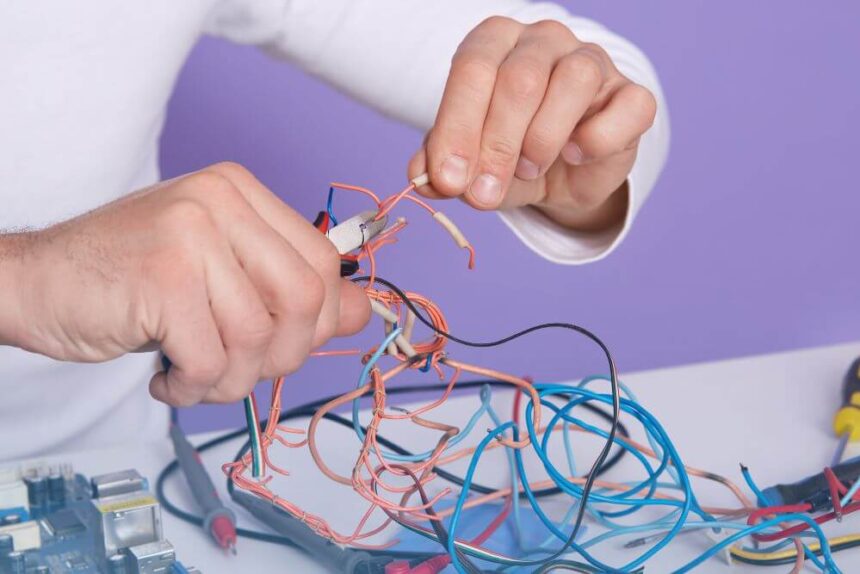
In reality, the law is very clear that only a licensed and qualified electrician is permitted to perform any fixed electrical wiring work in your home or business. Reading the rules does not give you the practical skills or the specialised testing equipment needed to ensure that a circuit is truly safe for long-term use. Moreover, attempting your own wiring is also a criminal offence that can lead to serious legal trouble.
5. Assuming All Cables Can Carry the Same Power
If you use a thin wire intended for a small LED light to power a heavy appliance like an oven or an air conditioner, the wire will become dangerously hot inside your walls. The standards are there to ensure that your electrician chooses a cable that can handle the load without melting the plastic insulation. Using the correct materials is the only way to ensure that your power system remains reliable and safe.
6. The Misconception That Fuses Are Just as Good
While fuses do protect the wires from catching fire, they are much slower than modern safety switches. A modern switch can detect a tiny leak of electricity through a human body and shut off the power in a fraction of a second, which a fuse cannot do. Upgrading your old fuse box to a modern switchboard that follows the latest rules is one of the best investments you can make for your home’s safety.
7. Thinking the Rules Only Cover Internal Wiring
You might assume that the safety standards stop at your front door, but the rules cover everything. There are strict zones for electrical equipment near water, ensuring that you don’t accidentally get a shock while you are enjoying a swim or washing your car. The standards also cover how solar panels must be mounted on your roof and how your main power line must be attached to the street poles.
Understanding the Importance of Professional Standards
Learning the misconceptions helps you appreciate why hiring a professional is the only way to handle the power in your home or business. By respecting the strict guidelines of the AS Wiring Rules, you are choosing a path of safety. Always trust the expertise of a qualified sparky who follows the national standards, and you will find that your electrical system serves you perfectly for many decades to come.